 Cyprus_Fishing
 @1957939806
 @5598571052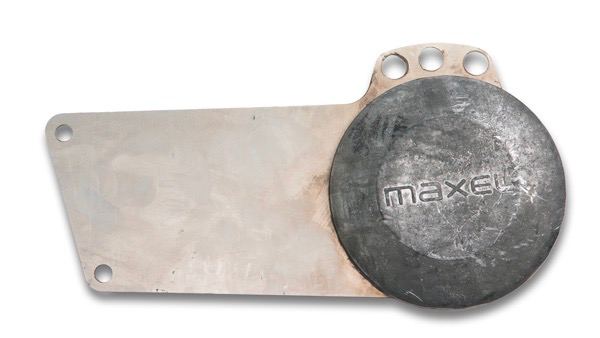
 @olehcy
исключения планеры и даунригеры естественно но там и груза по 3-5кг специальной формы
💬 ответы (1)
2023-06-22 17:14:08
@olehcyНу и собственно ответ ))))
Based on the given assumptions and calculations, the approximate depth of the weight would be negligible or very close to the water surface. Since the drag force (0.055 N) is significantly smaller than the buoyancy force (0.328 N), the weight will not sink deep into the water. Instead, it will likely remain near the water surface or only slightly submerged.
In this case, the depth can be considered to be in the order of centimeters or less, rather than meters. The weight's ellipsoid shape and small dimensions contribute to its limited submersion.
Keep in mind that these results are approximate and based on the assumptions and calculations made. Actual conditions and factors may influence the exact depth of the weight.
💬 ответы (3)
2023-06-22 17:10:43
@olehcySince the drag force is smaller than the buoyancy force, the weight will not sink deeper into the water. It will remain near the water surface or slightly submerged, depending on the exact conditions and other factors.
Please note that these calculations are based on the assumptions made regarding the dimensions and values. Actual results may vary based on the precise specifications and factors affecting the system.
Please note that these calculations are based on the assumptions made regarding the dimensions and values. Actual results may vary based on the precise specifications and factors affecting the system.
2023-06-22 17:10:57
@olehcyTo determine the depth of the weight, we need to consider the tension in the monoline and the buoyancy force acting on the weight. Assuming the weight is fully submerged in water, we can calculate the depth using the principles of buoyancy.
First, let's calculate the tension in the monoline. The tension in a string or line connected to a moving object, such as a boat, is equal to the force required to overcome the drag or resistance experienced by the object. In this case, the tension in the monoline is caused by the resistance of the weight in the water.
To calculate the tension, we can use the formula:
Tension = Drag force on the weight
The drag force on the weight can be calculated using the drag equation:
Drag force = (1/2) * (density of water) * (velocity of the weight relative to water)^2 * (cross-sectional area of the weight)
In this case, since the weight is an ellipsoid, its cross-sectional area is not constant. To simplify the calculation, we can assume the weight's cross-section is circular. The drag equation can be modified to:
Drag force = (1/2) * (density of water) * (velocity of the weight relative to water)^2 * (π * (radius of the weight)^2)
Let's assume the radius of the weight is r.
Next, we need to calculate the velocity of the weight relative to the water. Since the weight is attached to the boat and the boat is moving at a speed of 12 km/h, the weight will also have the same velocity.
Velocity of the weight relative to water = 12 km/h = (12 * 1000 m) / (3600 s) = 3.33 m/s
Now, we can calculate the drag force on the weight.
Drag force = (1/2) * (density of water) * (3.33 m/s)^2 * (π * r^2)
To determine the depth of the weight, we need to consider the balance between the tension in the monoline and the buoyancy force acting on the weight. When the weight is submerged in water, the buoyancy force equals the weight of the water displaced by the weight.
Buoyancy force = (density of water) * (volume of the weight) * (acceleration due to gravity)
Since the weight is an ellipsoid, its volume can be calculated as:
Volume of the weight = (4/3) * π * (semi-major axis) * (semi-minor axis)^2
Let's assume the semi-major axis of the ellipsoid is a and the semi-minor axis is b.
Now, to find the depth of the weight, we equate the tension in the monoline to the buoyancy force:
Tension = Buoyancy force
Using the equations derived above, we can calculate the depth of the weight. However, without knowing the specific dimensions of the weight (semi-major axis, semi-minor axis, and radius), we cannot provide an exact numerical value for the depth.
Alright, let's proceed with the given radius of 1 centimeter for the weight. Since the other values are not provided, we'll make some reasonable assumptions to calculate an approximate depth.
Let's assume the semi-major axis of the ellipsoid is 4 times the radius (a = 4 cm) and the semi-minor axis is twice the radius (b = 2 cm).
First, we'll calculate the drag force on the weight using the drag equation:
Drag force = (1/2) * (density of water) * (velocity of the weight relative to water)^2 * (π * (radius of the weight)^2)
Assuming the density of water is approximately 1000 kg/m³, we can calculate the drag force:
Drag force = (1/2) * (1000 kg/m³) * (3.33 m/s)^2 * (π * (0.01 m)^2)
≈ 0.055 N
Next, we'll calculate the volume of the weight using the ellipsoid's dimensions:
Volume of the weight = (4/3) * π * (semi-major axis) * (semi-minor axis)^2
= (4/3) * π * (4 cm) * (2 cm)^2
≈ 33.51 cm³
≈ 0.03351 L
Now, we can calculate the buoyancy force on the weight:
Buoyancy force = (density of water) * (volume of the weight) * (acceleration due to gravity)
= (1000 kg/m³) * (0.03351 L) * (9.8 m/s²)
≈ 0.328 N
To find the depth of the weight, we equate the tension in the monoline to the buoyancy force:
Tension = Buoyancy force
Since the tension in the monoline is equal to the drag force on the weight, we have:
Drag force = Buoyancy force
0.055 N = 0.328 N
First, let's calculate the tension in the monoline. The tension in a string or line connected to a moving object, such as a boat, is equal to the force required to overcome the drag or resistance experienced by the object. In this case, the tension in the monoline is caused by the resistance of the weight in the water.
To calculate the tension, we can use the formula:
Tension = Drag force on the weight
The drag force on the weight can be calculated using the drag equation:
Drag force = (1/2) * (density of water) * (velocity of the weight relative to water)^2 * (cross-sectional area of the weight)
In this case, since the weight is an ellipsoid, its cross-sectional area is not constant. To simplify the calculation, we can assume the weight's cross-section is circular. The drag equation can be modified to:
Drag force = (1/2) * (density of water) * (velocity of the weight relative to water)^2 * (π * (radius of the weight)^2)
Let's assume the radius of the weight is r.
Next, we need to calculate the velocity of the weight relative to the water. Since the weight is attached to the boat and the boat is moving at a speed of 12 km/h, the weight will also have the same velocity.
Velocity of the weight relative to water = 12 km/h = (12 * 1000 m) / (3600 s) = 3.33 m/s
Now, we can calculate the drag force on the weight.
Drag force = (1/2) * (density of water) * (3.33 m/s)^2 * (π * r^2)
To determine the depth of the weight, we need to consider the balance between the tension in the monoline and the buoyancy force acting on the weight. When the weight is submerged in water, the buoyancy force equals the weight of the water displaced by the weight.
Buoyancy force = (density of water) * (volume of the weight) * (acceleration due to gravity)
Since the weight is an ellipsoid, its volume can be calculated as:
Volume of the weight = (4/3) * π * (semi-major axis) * (semi-minor axis)^2
Let's assume the semi-major axis of the ellipsoid is a and the semi-minor axis is b.
Now, to find the depth of the weight, we equate the tension in the monoline to the buoyancy force:
Tension = Buoyancy force
Using the equations derived above, we can calculate the depth of the weight. However, without knowing the specific dimensions of the weight (semi-major axis, semi-minor axis, and radius), we cannot provide an exact numerical value for the depth.
Alright, let's proceed with the given radius of 1 centimeter for the weight. Since the other values are not provided, we'll make some reasonable assumptions to calculate an approximate depth.
Let's assume the semi-major axis of the ellipsoid is 4 times the radius (a = 4 cm) and the semi-minor axis is twice the radius (b = 2 cm).
First, we'll calculate the drag force on the weight using the drag equation:
Drag force = (1/2) * (density of water) * (velocity of the weight relative to water)^2 * (π * (radius of the weight)^2)
Assuming the density of water is approximately 1000 kg/m³, we can calculate the drag force:
Drag force = (1/2) * (1000 kg/m³) * (3.33 m/s)^2 * (π * (0.01 m)^2)
≈ 0.055 N
Next, we'll calculate the volume of the weight using the ellipsoid's dimensions:
Volume of the weight = (4/3) * π * (semi-major axis) * (semi-minor axis)^2
= (4/3) * π * (4 cm) * (2 cm)^2
≈ 33.51 cm³
≈ 0.03351 L
Now, we can calculate the buoyancy force on the weight:
Buoyancy force = (density of water) * (volume of the weight) * (acceleration due to gravity)
= (1000 kg/m³) * (0.03351 L) * (9.8 m/s²)
≈ 0.328 N
To find the depth of the weight, we equate the tension in the monoline to the buoyancy force:
Tension = Buoyancy force
Since the tension in the monoline is equal to the drag force on the weight, we have:
Drag force = Buoyancy force
0.055 N = 0.328 N
2023-06-22 17:10:31
@olehcyWe have a boat that goes in the sea with speed 12 km / h
We have a mono line with weight. The length of the mono is 60 meters. From one side its sticked to the boat (on water level), from another side it has a weight 0.2kg that looks like a ellipsoid.
What would be the depth of the weight in this case if boat goes straight
2023-06-22 17:09:36
 @244917939
Готов поспорить...в прошлый сезон дрыгалка принесла процентов 70 всего улова...в этом сезоне пока 0
Прочитай что в него в голове)))
💬 ответы (1)
2023-06-22 17:06:23
 @alexutochkin
 @Sergey_cypr
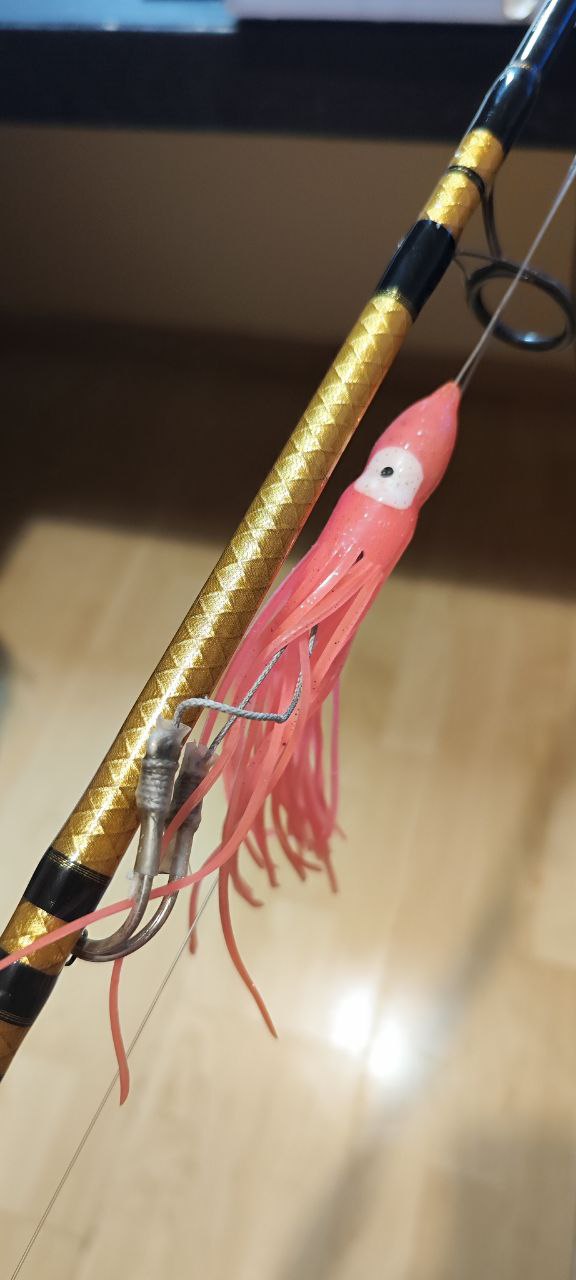
Наш личный опыт говорит, что особо не влияет. Раньше мы всегда ставили их. Последние 5 лет ловим совсем без них. И разницы не вижу. Но каждый сам себе хозяин. Рыбалка дело творческое. Мне вот дрыгалка нравится с кальмаром-пулей. Вроде и не особо уловисто, но красиво 😁😁😁 и, как мне кажется тунца привлекает. Но это не точно 😎
💬 ответы (1)
2023-06-22 16:59:21